Seasonal Eating: A Five Elements Guide to Eating with the Seasons
In Chinese medicine, there is a saying: “Follow the seasons, and the body follows you.” Seasonal eating is at the heart of this wisdom.
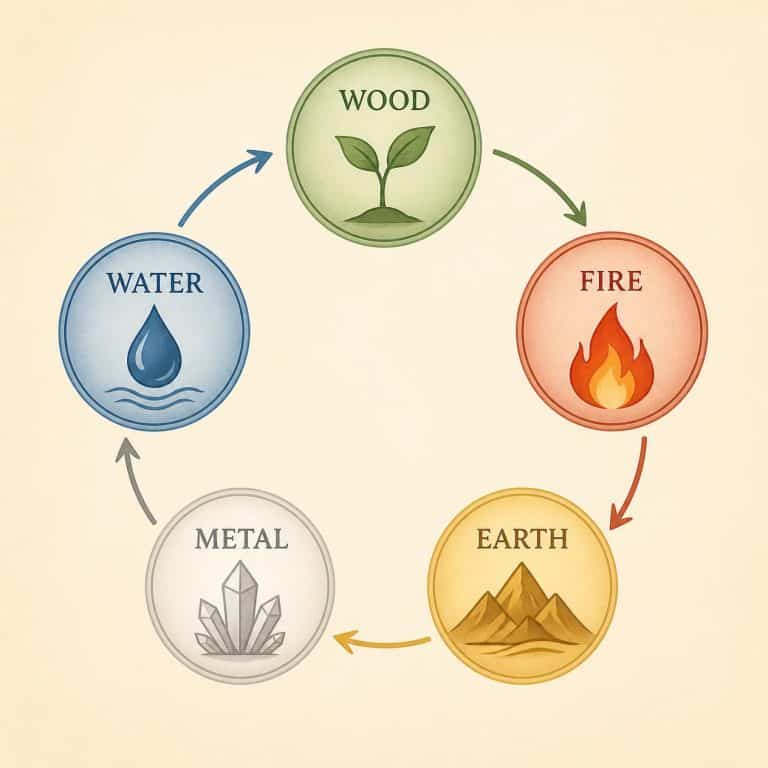
Long ago, people ate what the land offered at each time of year — and traditional Chinese wellness wisdom turned this natural rhythm into a complete system: the Five Elements (Wu Xing).
In this guide, you will find a simple, practical map of what to eat in each season, based on Five Elements thinking. No strict rules, no complicated theory — just gentle guidance you can actually use at your next grocery trip.
(If you are new to the Five Elements, you may want to read our beginner’s guide first: What Are the Five Elements?)
The Five Elements and the Seasons at a Glance
| Element | Season | Focus | Traditional Color |
|---|---|---|---|
| Wood (木) | Spring | Renewal & growth | Green |
| Fire (火) | Summer | Vitality & warmth | Red |
| Earth (土) | Late Summer | Digestion & nourishment | Yellow |
| Metal (金) | Autumn | Letting go & clarity | White |
| Water (水) | Winter | Deep rest & storage | Dark / Black |
The idea is gentle and intuitive: eat with what nature is offering, and your body moves with the rhythm of the year instead of against it.
Spring (Wood): Fresh, Green, and Growing
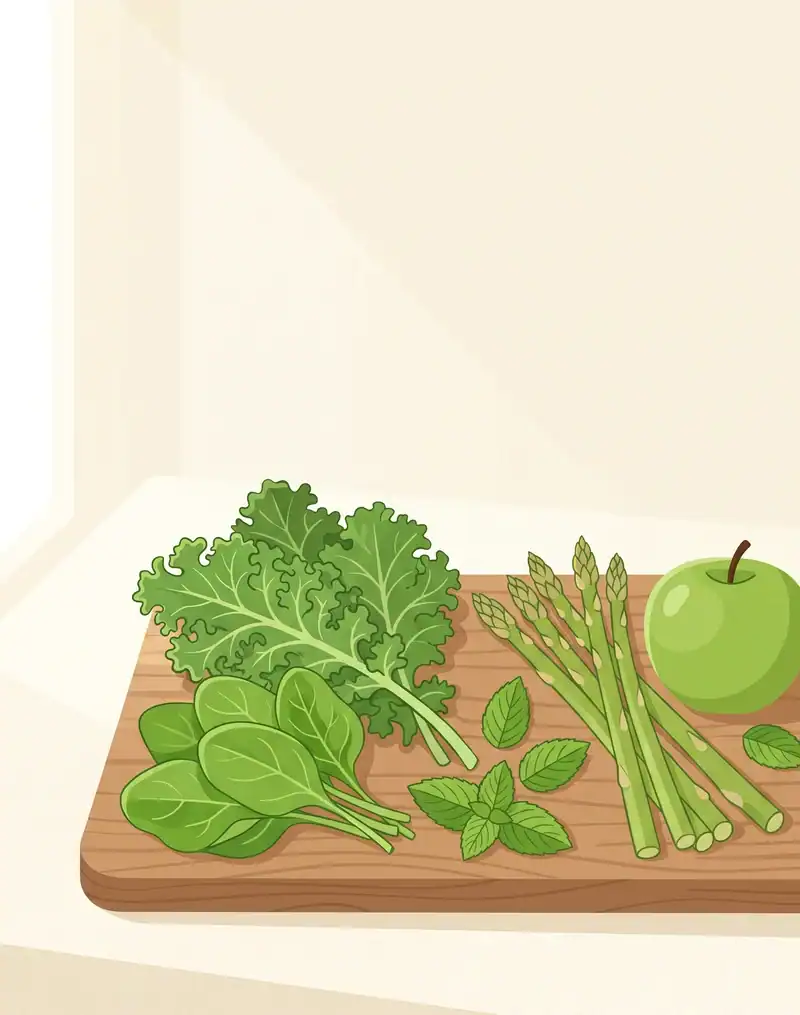
Spring is the season of new beginnings. In Five Elements thinking, it is linked to the Wood element and to the Liver — which traditional Chinese medicine associates with smooth, free-flowing energy.
Traditional advice for spring: eat fresh and green. Spring is when leafy greens are at their best.
| Easy spring foods | Why they fit |
|---|---|
| Kale, spinach, arugula | Green, leafy, full of fresh energy |
| Asparagus, broccoli, green beans | Young, growing shoots of the season |
| Peas, zucchini | Light, fresh, easy to digest |
| Green apples, mint | Bright and refreshing |
A simple spring habit: add one handful of leafy greens to a meal each day.
Summer (Fire): Light, Cool, and Hydrating
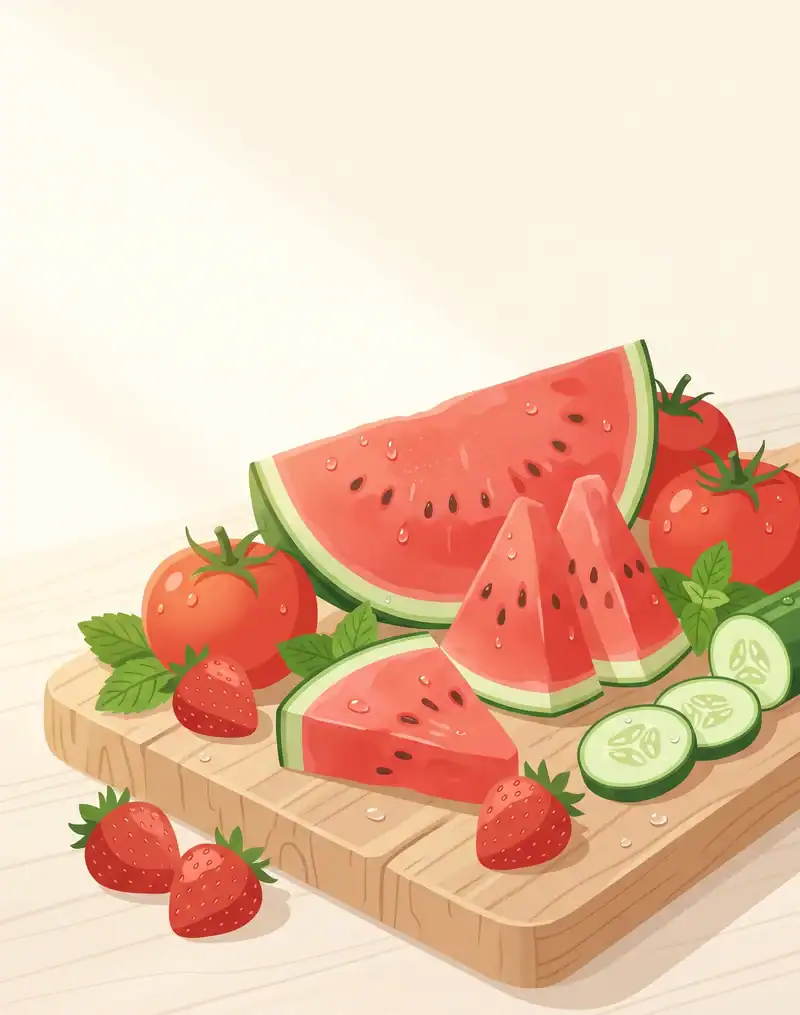
Summer is the season of fire and fullness. Traditional Chinese medicine links it to the Heart and values keeping cool and calm during the hottest months.
Traditional advice for summer: eat light and stay hydrated. Heavy, greasy foods are discouraged in the heat.
| Easy summer foods | Why they fit |
|---|---|
| Watermelon, cucumber | Naturally cooling and hydrating |
| Tomatoes, zucchini | Light, water-rich vegetables |
| Strawberries, raspberries, cherries | Sweet summer fruits |
| Mint, lemon water | Refreshing and cooling |
A simple summer habit: choose one water-rich fruit or vegetable each day.
Late Summer (Earth): Warm, Nourishing, and Grounding
Between summer and autumn is a short transition — often called “late summer” or “Indian summer.” In Five Elements thinking, this is the season of the Earth element and the Spleen (digestion).
Traditional advice for late summer: eat warm, cooked, and grounding foods — think soups, stews, and root vegetables.
| Easy late-summer foods | Why they fit |
|---|---|
| Pumpkin, butternut squash | Sweet, grounding, warming |
| Sweet potatoes, carrots | Root vegetables, hearty |
| Corn, oats, rice | Gentle, easy to digest |
| Yellow squash | Warm yellow tones, seasonal |
A simple habit: swap one cold meal a week for a warm, cooked one.
Autumn (Metal): Moist, Soothing, and Clear
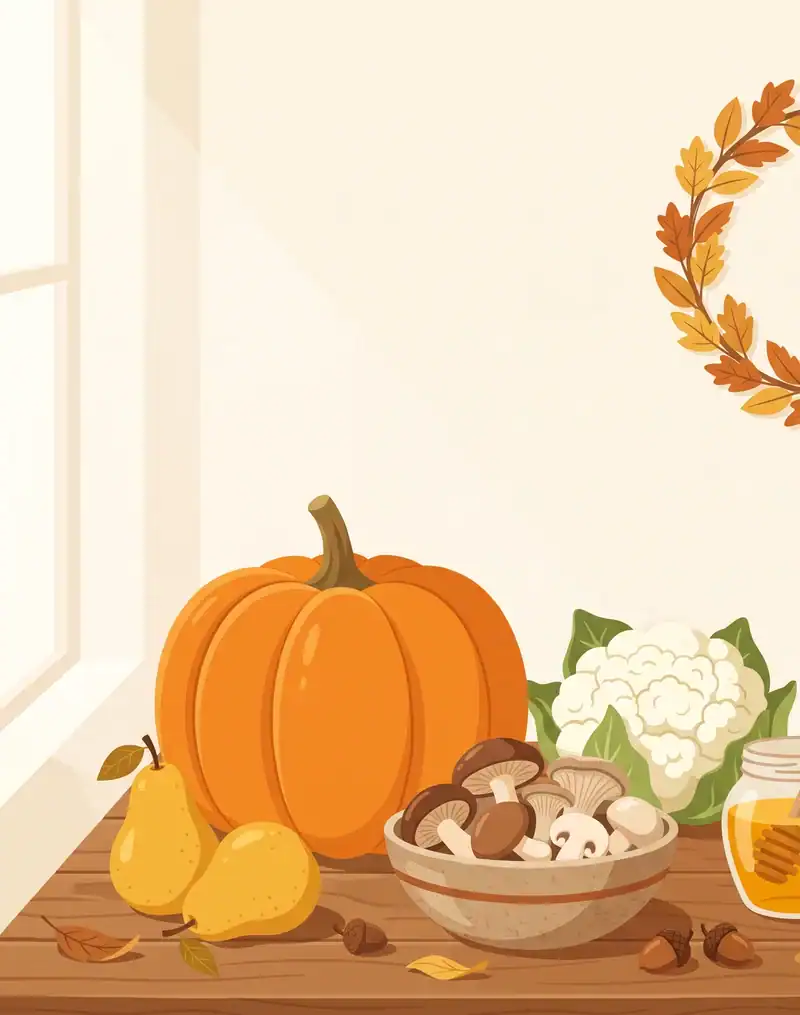
Autumn is the season of harvest and letting go. Traditional Chinese medicine links it to the Lungs and values moist, soothing foods as the air turns dry.
Traditional advice for autumn: eat moist and gentle foods — think pears, apples, and slow-cooked dishes.
| Easy autumn foods | Why they fit |
|---|---|
| Pears, apples | Juicy, naturally sweet |
| Cauliflower, mushrooms, onions | White-toned, seasonal |
| White beans, oats | Soft, nourishing, easy to cook |
| Honey (in moderation) | Naturally soothing |
A simple habit: keep a piece of seasonal fruit on your kitchen counter as a daily reminder.
Winter (Water): Warm, Dark, and Nourishing
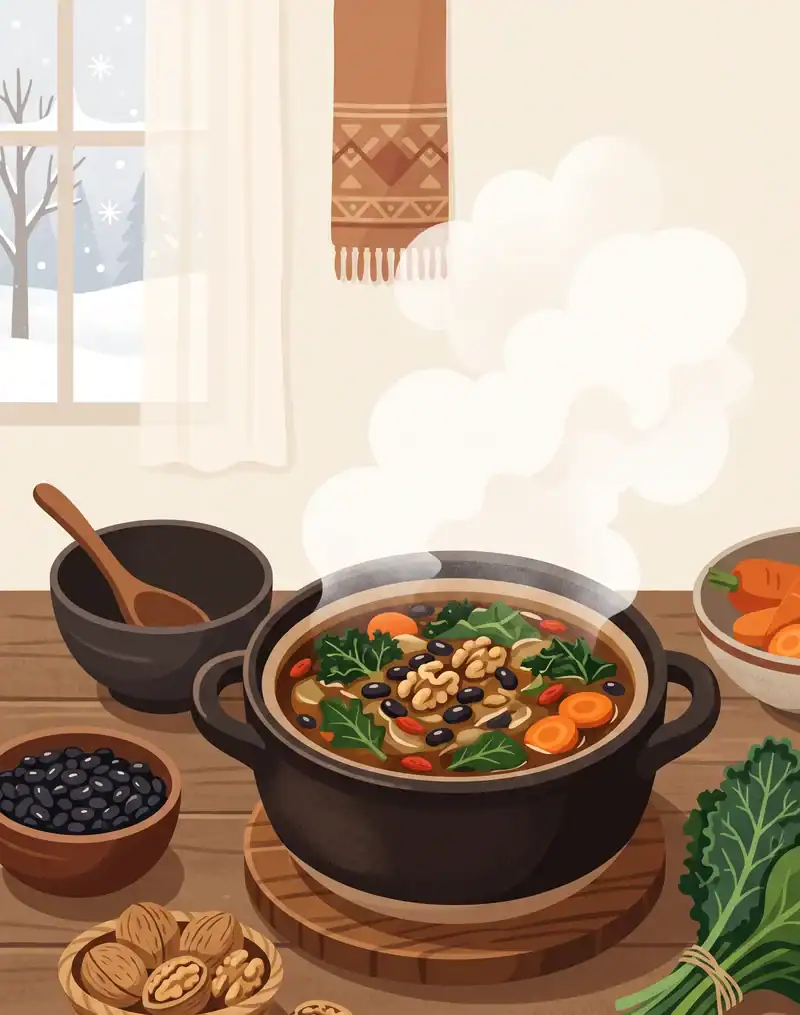
Winter is the season of rest and storage. Traditional Chinese medicine links it to the Kidneys and values warm, slow-cooked, deeply nourishing foods.
Traditional advice for winter: eat warm, eat dark, and eat slowly. This is the season for soups and stews.
| Easy winter foods | Why they fit |
|---|---|
| Black beans, black rice | Dark, grounding, hearty |
| Walnuts, seeds | Nourishing, good for cold days |
| Dark leafy greens (kale, collards) | Deep color, winter harvest |
| Root vegetables (carrots, parsnips) | Warming, storage-friendly |
| Ginger, cinnamon (in cooking) | Warm and comforting |
A simple winter habit: make one pot of soup or stew a week.
Beyond Seasons: The Rhythm of a Day
Seasonal eating is only part of the picture. Traditional Chinese wellness also observes the rhythm of the day — morning as a time of rising energy, evening as a time of settling down.
Simple, traditional-friendly daily habits:
- Morning: eat a gentle, warm breakfast; light movement helps energy rise.
- Midday: the main meal of the day, when digestion is traditionally considered strongest.
- Evening: keep dinner lighter and earlier; allow the body to settle before rest.
You do not need a strict schedule — just a gentle awareness of how energy moves through the day.
One Simple Step This Week
Start where you are. Pick your current season (spring, summer, late summer, autumn, or winter), choose one food from that season’s list, and add it to a meal this week.
That single, small choice is seasonal eating in action — no rules, no extremes, just moving gently with nature.
Final Thoughts
Seasonal eating is not a diet. It is a way of paying attention — to the weather, to the market, to how your body feels as the year turns.
Five Elements thinking simply gives this ancient habit a clear, beautiful structure. Eat with the seasons, and let the rhythm of the year support you.
Disclaimer: This article is for educational and informational purposes only and does not constitute medical advice. It is not intended to diagnose, treat, cure, or prevent any disease. Traditional Chinese medicine perspectives are presented as cultural and historical views. Always consult a qualified healthcare professional for personal health matters.